
How to Build Branding Into Your Product, Not Onto It
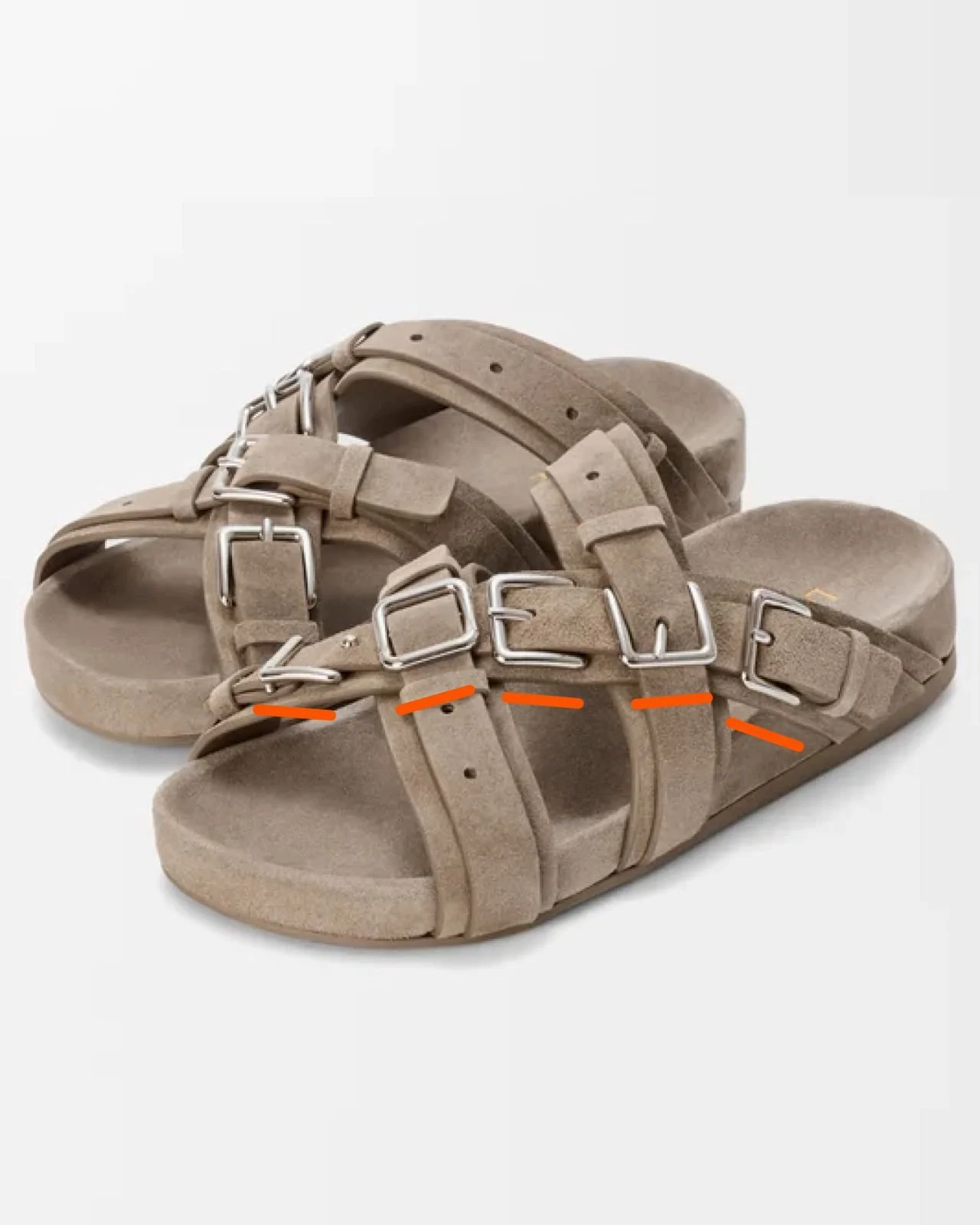
Loewe hid its logo in the last place anyone would check.
The buckles.
Their new sandal has 5 metal buckles running across the strap.
Line them up, and they spell L-O-E-W-E.
At first glance, it just looks like a chunky multi-buckle sandal.
You'd have to already be looking for it to catch what's happening.
For me, that's the part that makes it work.
The branding lives inside hardware the shoe already needed:
Straps.
Straps need buckles either way.
Loewe just made the buckles do double duty.
Here's why it works:
1️⃣ The branding hides inside something functional
Nobody adds a logo to a buckle.
Loewe made the buckle the logo.
👉 Function is the best camouflage a logo could ask for.
2️⃣ The design is built to start an argument
Half the internet calls it clever.
The other half calls it an expensive way to slap a name on a shoe.
Both sides are still talking about it days later.
That disagreement is doing the marketing for them.
👉 A logo nobody discusses gets ignored.
A logo people argue about gets remembered and shared.
A lot of DTC brands treat branding as something you add at the end.
A tag here, a stamp there, always separate from the product itself.
Loewe skipped that step and made the branding the hardware.
The takeaway isn't to hide your name in your buckles.
It's to stop treating your branding as an add-on and start treating it as part of the product.
Where in your product could your branding be doing a job, instead of just sitting there?
♻️ Repost if you didn't clock the buckles until you looked twice.
And follow me, Jacob Rokeach, for more on creative systems and branding that works harder than a logo.