
How Successful Operators Avoid Burnout Over a 20-Year Career
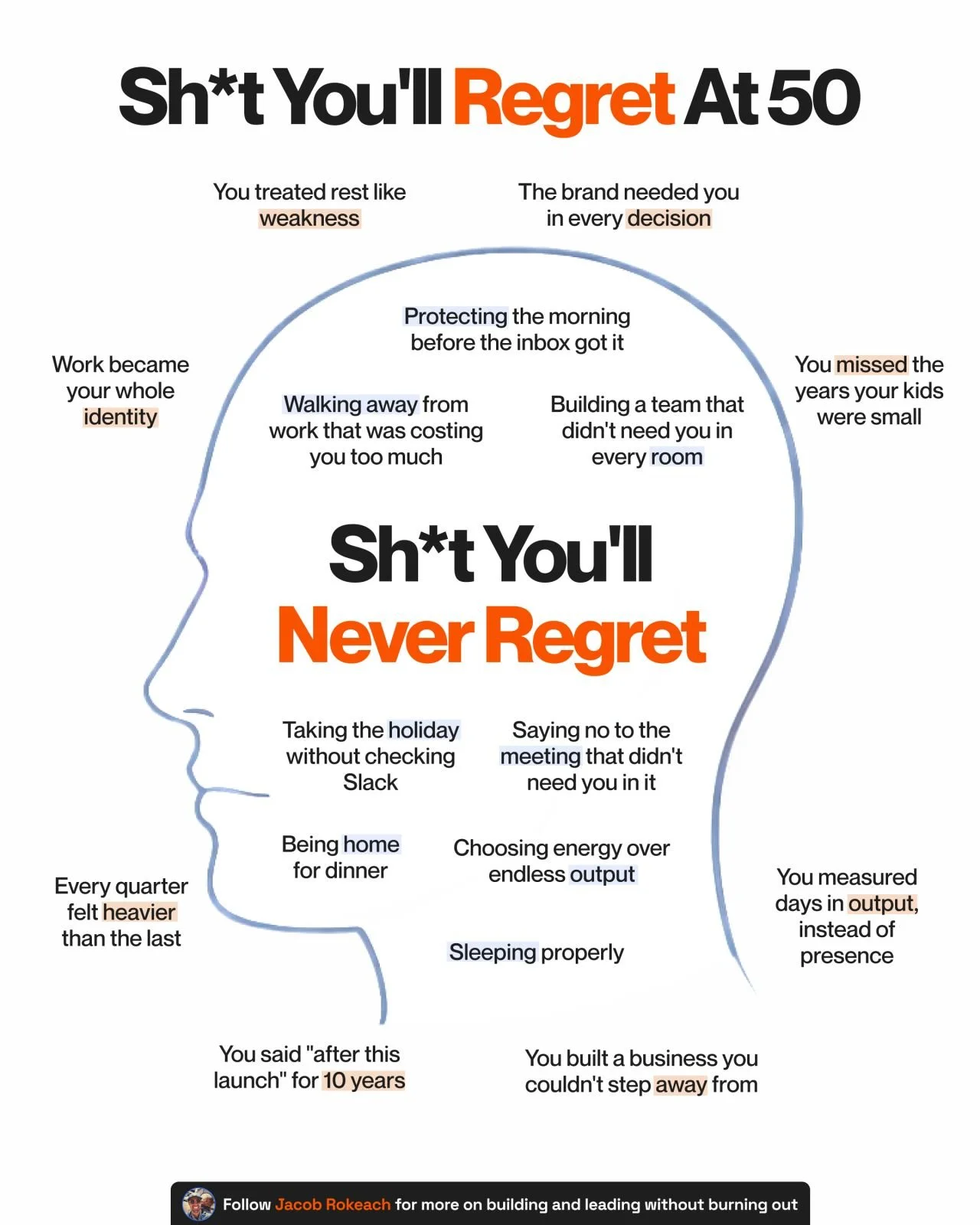
A lot of operators hit 50 and realize they spent the last decade in survival mode.
And that regret hardly ever comes from the work itself.
It comes from the things they normalized along the way.
Skipped dinners.
Late-night Slack.
A calendar that ran them instead of the other way around.
I think about this a hell of a lot more the older I get.
How fast survival mode becomes the new baseline.
You answer messages at 11 pm for a week.
Then a month.
Then a year.
You tell yourself it's for the launch or deadline.
Then one day you look up, and a decade's gone, and so is the life you meant to build around it.
I've watched it inside brands I worked for,
And I've caught myself in the middle of it more than once.
But not everyone ends up here.
The ones who don't, the ones who make it 15 or 20 years without burning out, all have something in common.
They made deliberate choices about what they wouldn't trade 👇
- Sleeping properly
- Being home for dinner
- Taking the holiday and not checking Slack
- Saying no to the meeting you don't need to be in
- Building a team that doesn't need you in every room
- Walking away from work that costs you more than it returns
- Protecting the first hour of your morning before the inbox owns it
Nobody consciously chooses a life they regret.
They adapt to it, decision by decision, until the regret becomes the baseline.
The fix is the same as anything else in operating.
You can't manage what you don't measure.
And you can't protect what you haven't decided is worth protecting.
What's one thing you've protected that you'd recommend to another operator?
Drop it in the comments.
♻️ Repost for an operator who needs to read this today.
And follow me, Jacob Rokeach, for more on building and leading without burning out.