
Beauty’s Copycat Month: Is Anyone Actually Making Anything New?
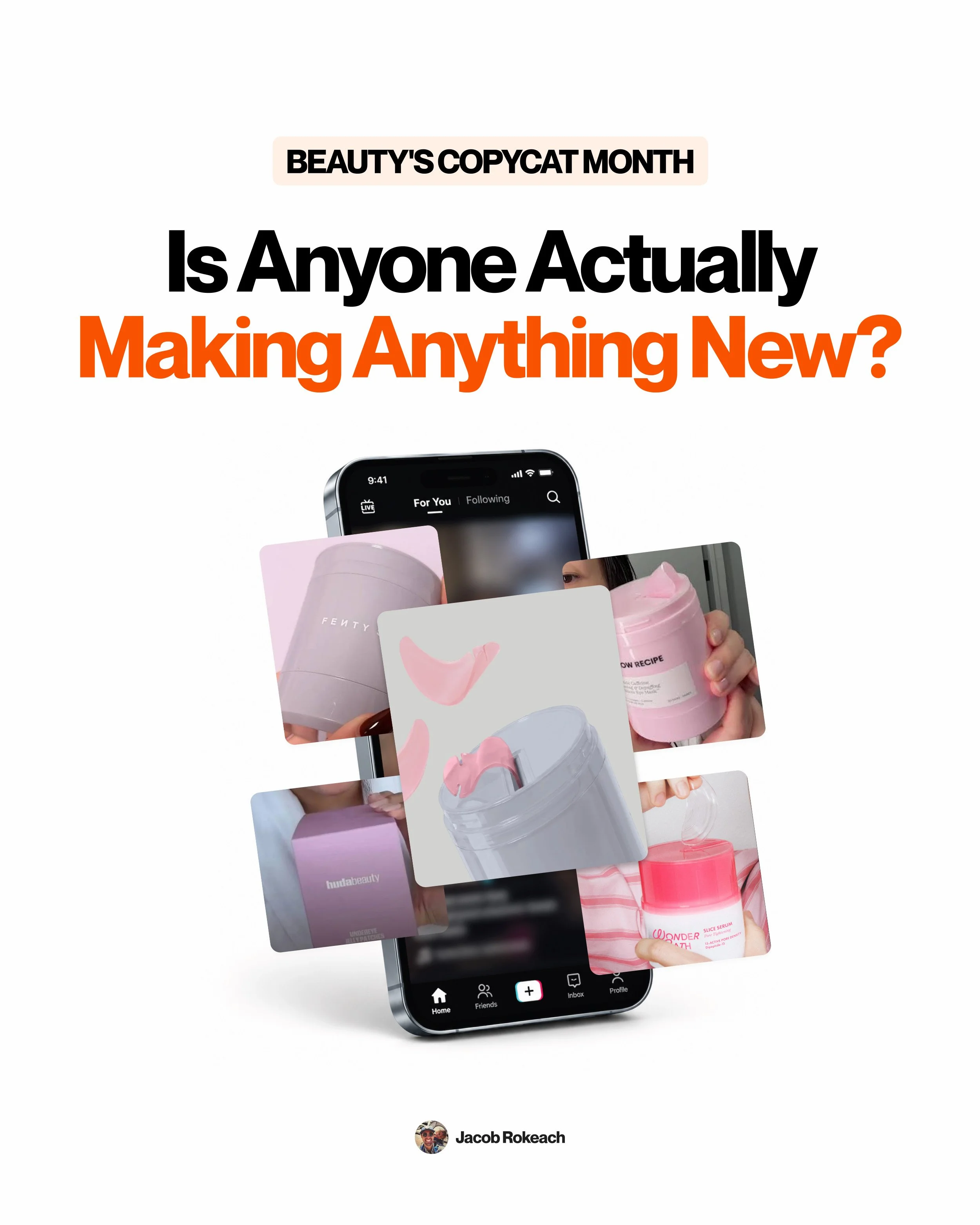
Beauty had 2 separate "wait, that's the same thing" moments this month.
And both times, the internet got the story wrong...
First it was eye patches.
Then it was a concealer name.
Fenty Skin, Glow Recipe, Huda Beauty, and Wonder Bath all launched eye patches in the exact same slice style packaging within a few days of each other.
Turns out, none of them designed that packaging.
They all licensed the same mechanism from a factory that already had it built.
Then Molly Sims called out Jones Road for naming a concealer "Wide Awake."
A name already used by a brand called Yise.
Except Yise wasn't first either.
Dominique Cosmetics had used the same name before both of them.
Bobbi Brown, who founded Jones Road, apologized, said no trademark existed on the name, and agreed to rename the product anyway.
Two very different situations.
Two very different responses.
The eye patch brands leaned into it.
Memes, comments on each other's posts, made the whole thing a joke.
Jones Road went the other way.
Straight apology, no drama, rename and move on.
Neither response was wrong.
Both dodged the one thing that tanks a brand's reputation the most:
Denying it happened or getting defensive about it.
It's worth pointing out though (since it's not always as scandalous as it looks online), that a lot of this repetition is accidental.
Multiple industries constantly come up with the same idea around the same time, especially in beauty, retail, journalism, etc.
Basically everywhere creative work happens.
Because everyone's watching the same TikTok trends, competitor launches, retail calendars.
So if 10 brands are staring at the same inputs, a lot of them are going to end up in the same place.
It's just the way it is.
When this many brands are naming things the same, packaging things the same,
sitting in the same trend cycle, that's an innovation problem dressed up as an oversaturation one.
And that's a much bigger problem than either headline let on.
Here's what's worth taking from both of these:
1️⃣ Similar isn't always stolen.
Shared manufacturers and parallel thinking explain more of this than people assume.
2️⃣ How you respond matters more than what happened.
A joke or an apology both work.
A joke is probably what I'd lean into more, as long as your brand's got the personality to pull it off without looking petty.
Silence and defensiveness just make you look guilty, even when you did nothing wrong.
3️⃣ If a name or a packaging shape is your whole differentiation, you didn't really have one.
Differentiation lives in positioning, voice, and product experience.
The stuff a factory can't hand you off the shelf.
Both brands survived this just fine.
The ones who don't are the ones who pretend nothing happened.
Which response did you think handled it better, the joke or the apology?
♻️ Repost if you didn't clock both of these happening in the same month.
And follow me, Jacob Rokeach, for more on how DTC brands get built.