
Marketing Data: Why More Data Isn't Always Better
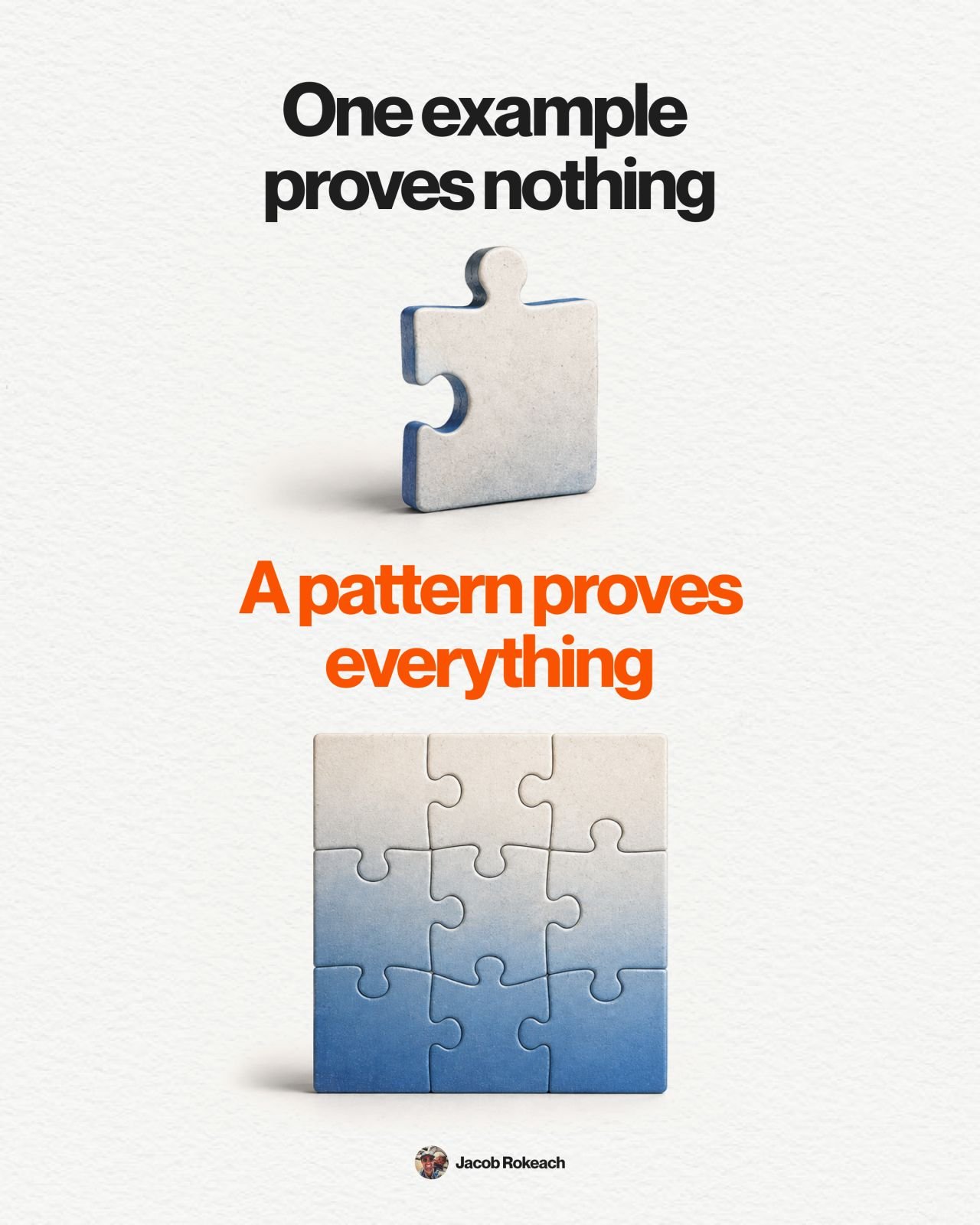
We had data sitting right there.
We left some of it out on purpose.
Sounds like a bad call.
But in reality... it's the smarter one, and here's why 👇
We're building a benchmark report across 10 brands we manage, pulling together every number that matters.
Think MER, ROAS, CAC, AOV, the stuff that tells you whether a business is healthy, instead of just whether one ad looked good.
But before we could trust any of it, we had to decide what counted as solid data and what didn't.
Think about it this way:
Flip a coin twice and get 2 heads.
Does that mean the coin always lands on heads? No.
You just don't have enough flips yet to know anything.
Flip it 100 times, and the pattern means something.
Marketing data works the exact same way, and most brands never stop to check.
If a number is built on a tiny sample, one weird week can swing it completely.
A single big order, one slow Tuesday, and suddenly your "average" means nothing.
But if a number is built on a big sample, one weird week barely moves it at all.
This is exactly why we left 2 channels out of our own benchmark report:
Pinterest and TikTok.
They just didn't have enough spend or orders across our brands to trust the numbers they were showing us.
And if we were to include them anyway, we'd be handing you a coin flipped twice and calling it a pattern.
So we cut them, on purpose.
Even though more channels usually sound more impressive on a slide.
But that's a lesson I think everyone should take when it comes to marketing:
More data isn't automatically better data.
Sometimes it's just more numbers with nothing solid behind them.
So here's the gut check worth running before you trust any number someone hands you.
Ask how much volume is behind it.
A number built on 5 orders and a number built on 5,000 orders can look identical on a slide and mean completely different things.
We're finishing a full breakdown of this across 10 brands, covering the channels we trust and exactly why we cut the ones we don't.
What's one number in your business you've never questioned the sample size behind?
♻️ Repost this for the marketer still treating every number as equally trustworthy.
And follow me, Jacob Rokeach, for more on growth and creative strategy in retail, beauty, and fashion.