
How to Turn Marketing Reporting Into Actionable Growth Signals
You left the meeting with more data than you walked in with.
And still no idea what to do next.
It's because you've got a signal problem.
Most brands aren't short on reporting.
They have dashboards, weekly exports, attribution tools,
And more metrics than anyone can act on.
The issue is that none of it gets filtered down to a decision.
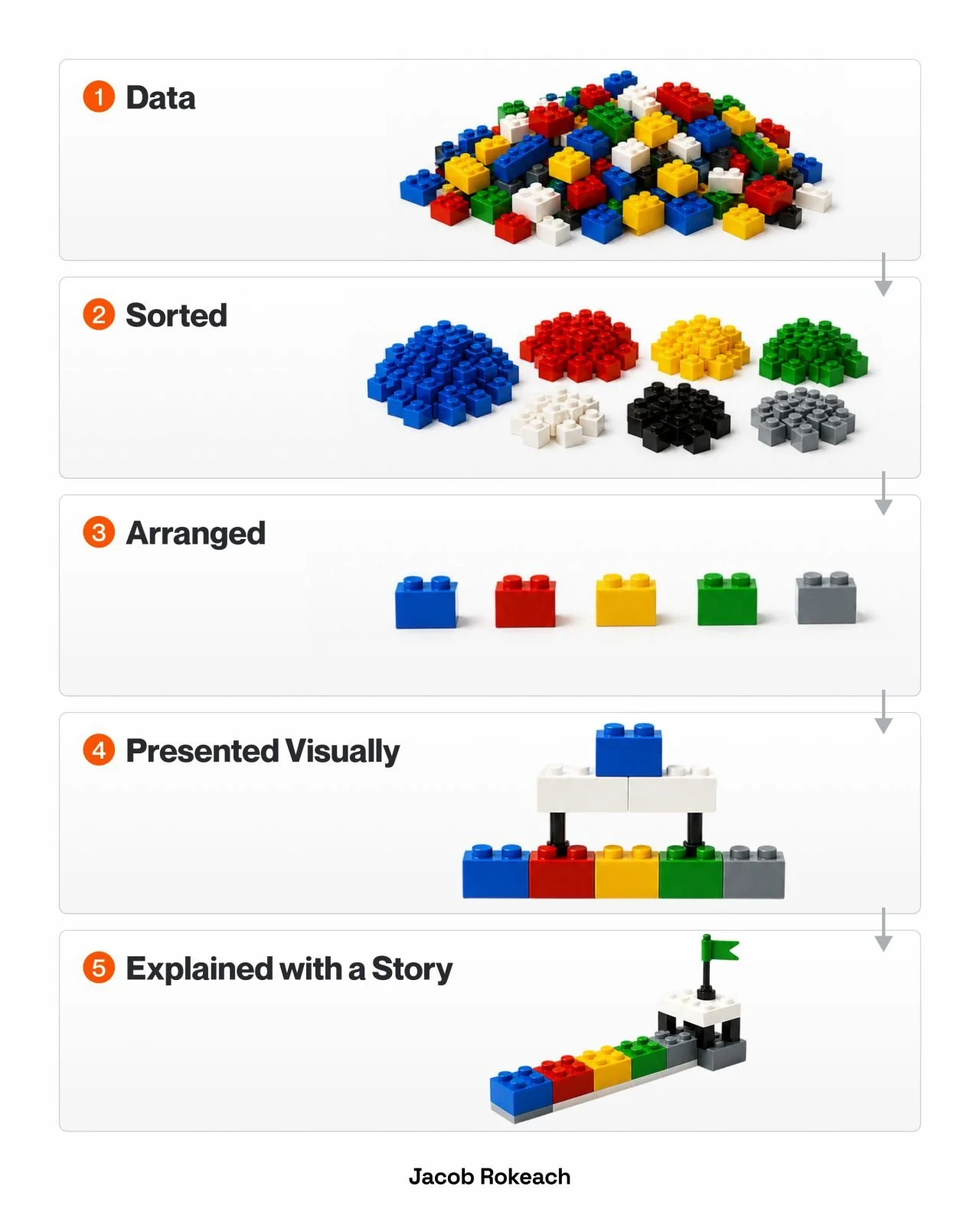
Here is what that journey should look like:
(And how we do it here at Fluency.)
1️⃣ Data.
Numbers without context.
You know what happened. You don't know what it means.
↳ Action: Log everything first. Spend, creative, channel, timing.
2️⃣ Sorted.
Organized by source, channel, or time period.
Easier to read, but still not actionable.
↳ Action: Separate brand from performance, and paid from organic.
3️⃣ Arranged.
The metrics that actually tell you something. Set everything else aside.
ROAS by creative, CPA by audience, and creative fatigue rate.
↳ Action: Ask one question at every layer: Does this number change what we do next?
4️⃣ Presented Visually.
What was running, what changed, and what was happening in the business.
Context is what turns a number into a pattern.
↳ Action: Map every signal to a timeline, e.g. creative changes, promotions.
5️⃣ Explained with a Story.
A budget call or a creative shift. Something specific to act on.
This is the only output that matters.
↳ Action: Every reporting session ends with a decision (what we're changing).
Most reporting stops somewhere in the middle.
It gives you a cleaner view without a clearer direction.
Data doesn't create better decisions.
Signals do.
Where does reporting break down in your business?
Is it the data itself, or what happens after it lands?
If you're running a consumer brand and your reporting is not producing clear decisions, Fluency offers a free consult.
👉 https://lnkd.in/dD6SNFen
♻️ Repost for an operator who's left a reporting meeting without a clear action.
And follow me, Jacob Rokeach, for more like this.